The Lightning Network is a secondary layer on the Bitcoin blockchain which allows users to create payment channels where transactions can occur away from the main blockchain, but still benefit from the blockchain’s security and decentralization. These are known as off-chain transactions. The second layer offers speed, cost savings and scalability for the entire Bitcoin network.
Analogy and Example
The analogy of a bar tab below illustrates how the lightning network (LN) protocol works. Let’s assume the bar operates on a credit card network. Instead of swiping your card and settling the balance each time you order a beer…it makes sense to save time, energy and fees by tallying all of your drinks together at the end of the night and making the final settlement in one payment.
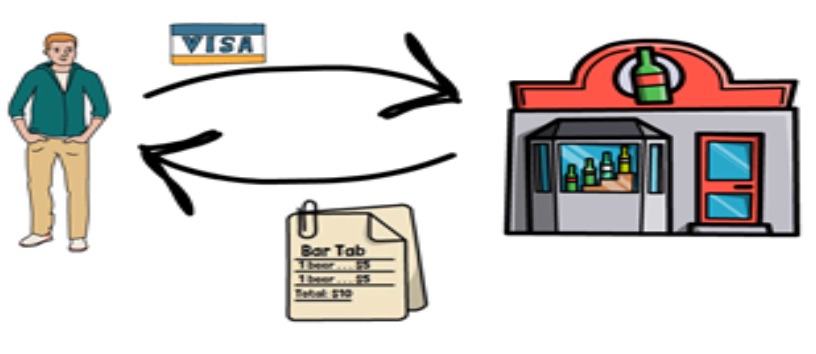
Now, let’s say the bar is also operating on the Lightning Network.
you would open up a LN payment channel with the bar, similar to a running tab. Transactions get recorded on the payment channel, the same way that they would get tallied on a bar tab. Simply put, Bitcoin is just bouncing between you and your bar, BUT ONLY via the “payment channel”.
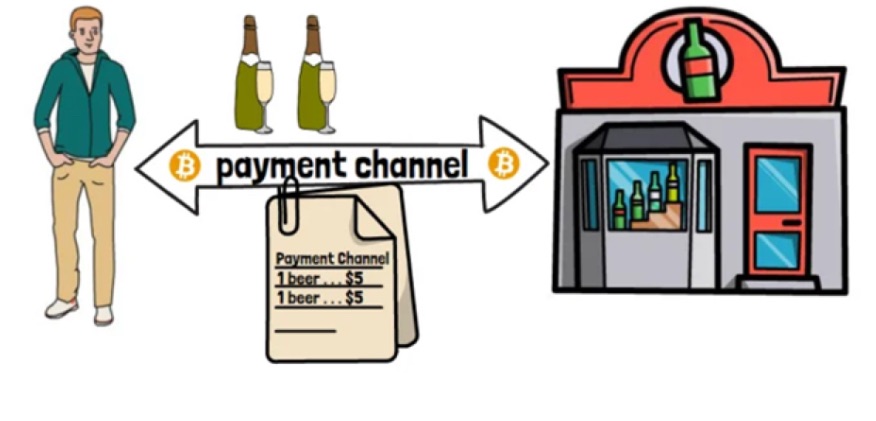
When you close the “payment channel”, the final settlement of bitcoin is broadcast to the blockchain, IN ONE TRANSACTION, which effectively finalizes all of your payment channel transactions.
SO WHATS THE BENEFIT…
by conducting potentially infinite transactions on the Lightning Network rather than on the blockchain, we lessen the burden on the blockchain, improve transaction rates for everyday purchases, and keep transaction fees low. Furthermore, You don’t need a direct payment channel with someone in order to pay them. You can pay people and businesses through intermediary channels on the network.
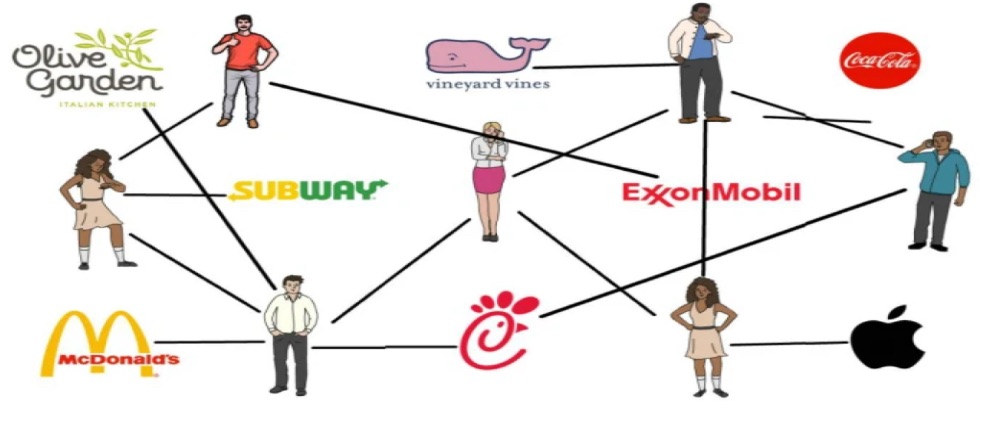
Network Intermediaries routing payments is kind of like how the Internet routes packets. Say you bring your friend, Bob, with you to the bar. Bob doesn’t have a payment channel open with the bar, but he does have one with you. Bob can still pay the bar through your payment channel.
Once the two parties decide to close the payment channel, all of the transactions that occurred inside are consolidated and then broadcasted to the main blockchain ledger. Consolidating the smaller transactions allow for larger transactions to be validated in a quick manner. Without payment channels, your small coffee and scone transactions would get in the way of the larger transactions, slowing down the Bitcoin network for everyone.
Can’t I just utilize the bitcoin protocol?
You could, of course, buy your coffee and scone through a normal Bitcoin transaction. However, each time you order you would have to pay the network fees which may cost more than the coffee itself. What’s the use in that? Instead with the Lightning Network, the only fees you pay are to open and close the payment channel. Visa transactions that run on top of Fedwire are the “fiat analogy” to lightning transactions that run on top of bitcoin.
In Summary
The Lightning Network is merely a secondary environment; it has no blockchain and no native asset or token. To access this second layer, you must create a special transaction on the bitcoin blockchain known as a hashed time lock contract. When you broadcast this transaction, you tell the bitcoin blockchain these funds are now locked and cannot be moved until this contract is closed. On the Lightning network side, those funds are now unlocked into a payment channel.
The Lightning Network is built upon smart contracts that create off-chain payment channels between two parties. For example, you and your local cafe can create a payment channel in which you pay for your daily coffee and scone. Once the payment channel is open, you can make an unlimited number of payments.
Transactions occur instantly and at a fraction of what it would cost on the main blockchain. Your payment channel has its own ledger where the transactions are recorded away from the main Bitcoin blockchain. Each party has the power to close or renew at their discretion.
 def-invest
Leave a comment